B
O
S
S
A
U
T
O
Loading
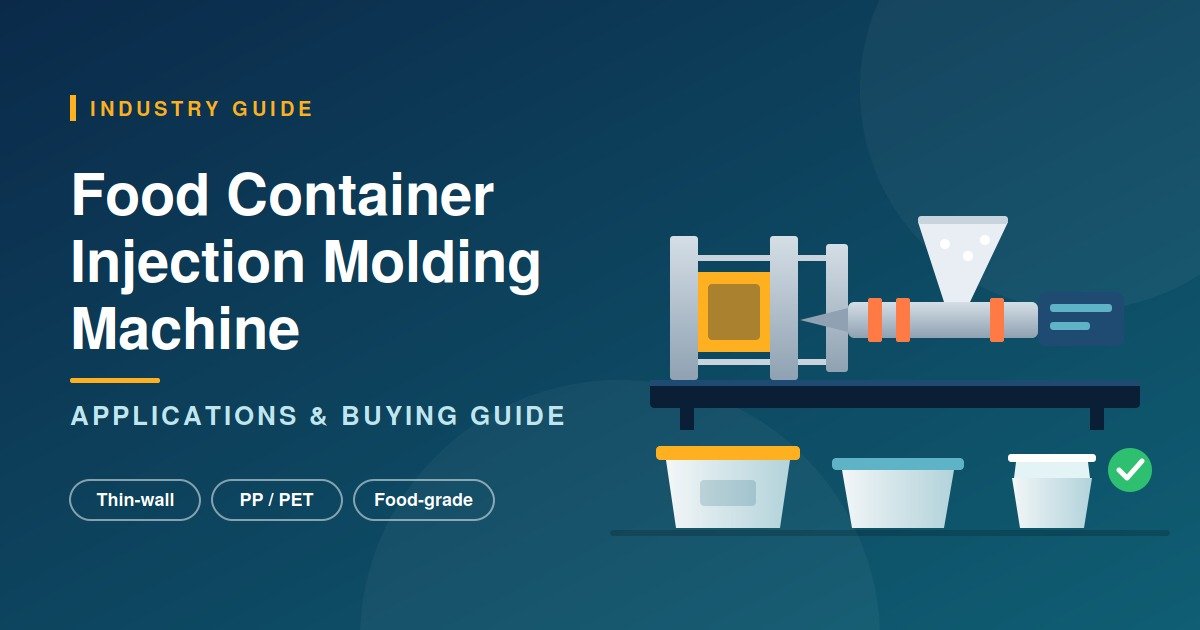
Food Container Injection Molding Machine: Applications & Buying Guide
14
Oct
Food Container Injection Molding Machine: Applications & Buying Guide
Food Container Injection Molding Machine: Applications & Buying Guide
The demand for plastic food containers continues to grow across food packaging, takeaway services, catering, food processing, and retail industries. Manufacturers need reliable production equipment that delivers consistent quality, high output, and efficient operation.
A food container injection molding machine helps manufacturers produce plastic containers and related packaging components with consistent dimensions, repeatable quality, and production efficiency.
In this guide, we explore how these machines work, their applications, important features, and what manufacturers should consider before investing in one.
What Is a Food Container Injection Molding Machine?
A food container injection molding machine is an industrial machine used to manufacture plastic containers and packaging products by injecting molten plastic into a specially designed mold.
The machine melts plastic material, injects it into the mold cavity under controlled pressure, and allows it to cool and solidify into the required shape. Once the part is formed, the mold opens and the finished product is removed.
Depending on the mold design and production requirements, these machines can manufacture products such as food storage containers, takeaway packaging, lids, tubs, and other plastic packaging components.
How Does a Food Container Injection Molding Machine Work?
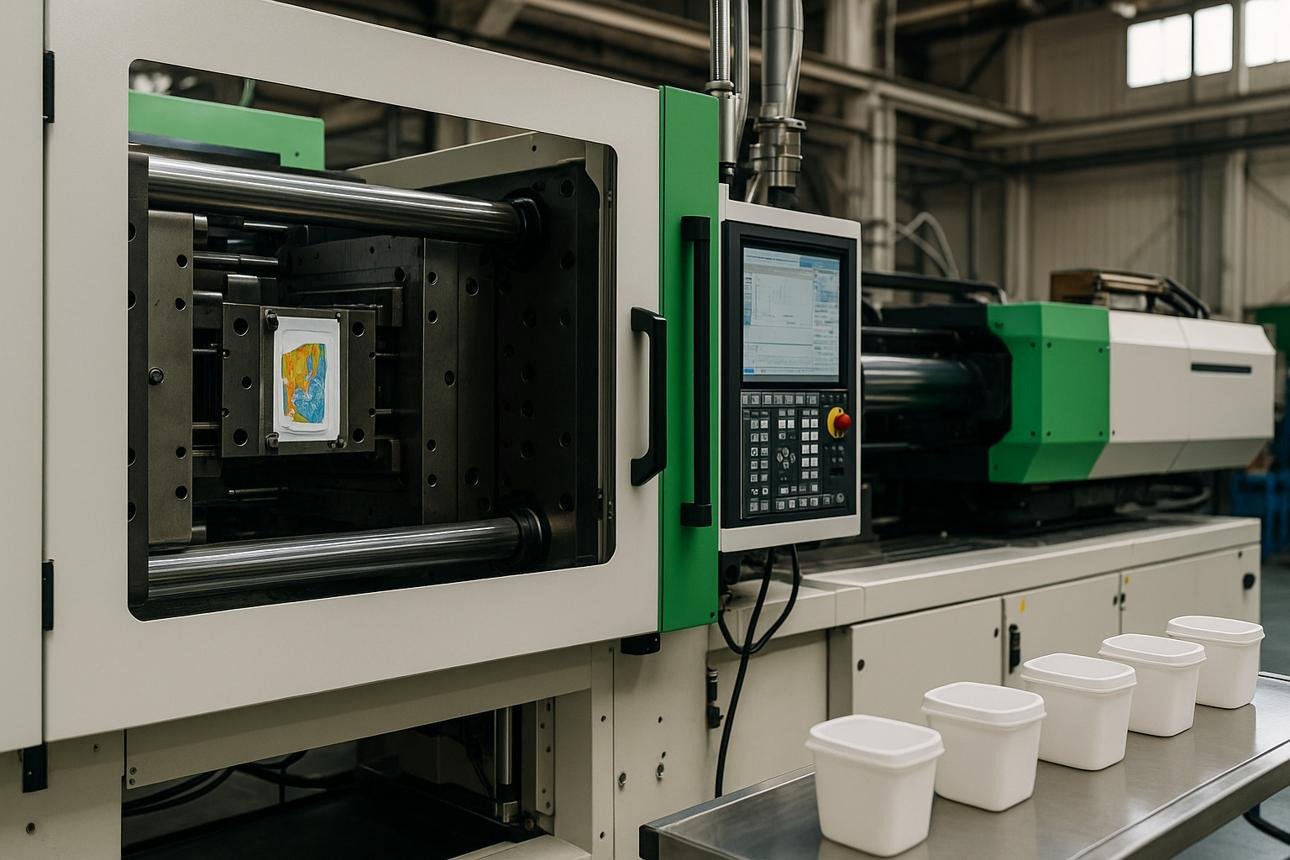
The injection molding process generally involves the following steps:
- Material feeding: Plastic granules are supplied to the machine's hopper.
- Plasticizing: The material is heated and melted inside the barrel by the heating system and screw.
- Injection: Molten plastic is injected into the mold cavity under controlled pressure.
- Cooling: The plastic cools and solidifies inside the mold.
- Mold opening: The mold opens after the required cooling time.
- Ejection: The finished container or component is removed from the mold.
- Repeat production: The machine starts the next cycle to continue manufacturing.
The overall cycle time depends on the material, product dimensions, mold design, cooling system, and machine settings.
Applications of Food Container Injection Molding Machines
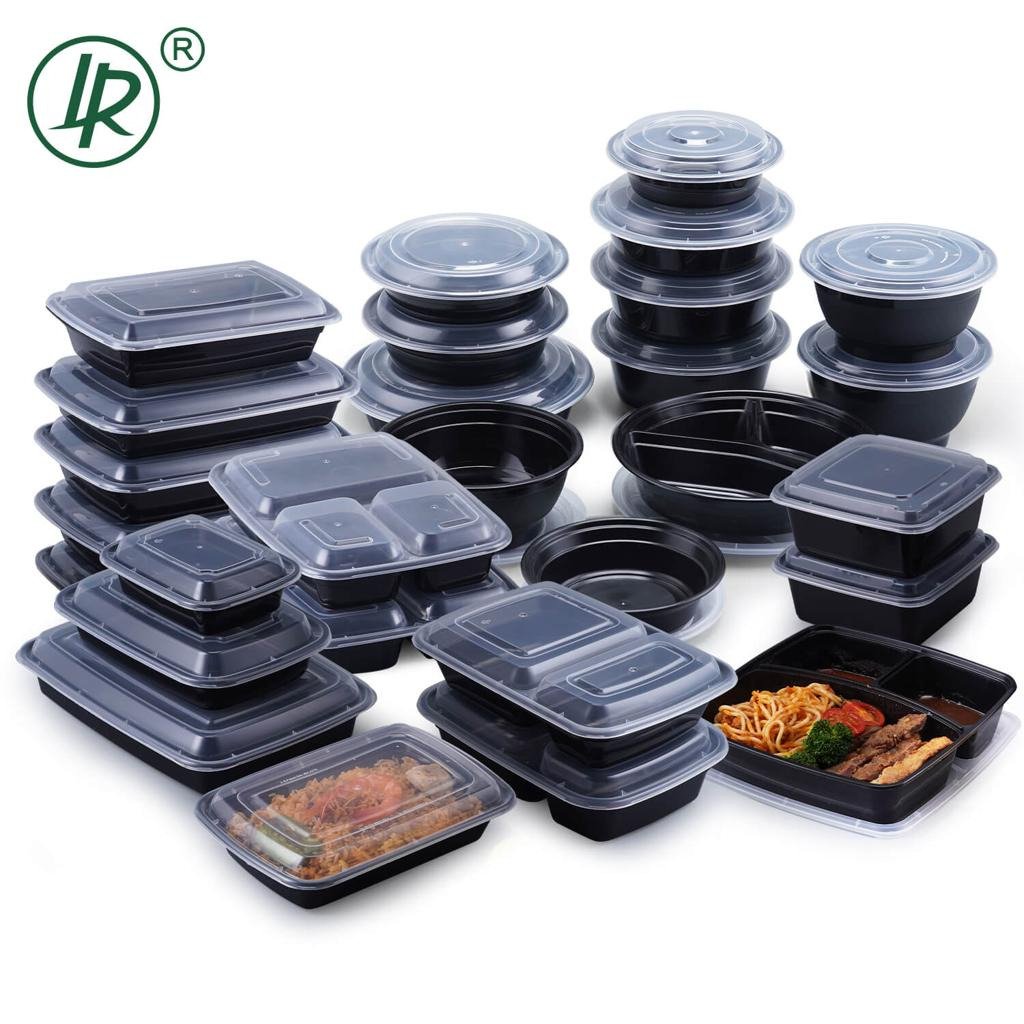
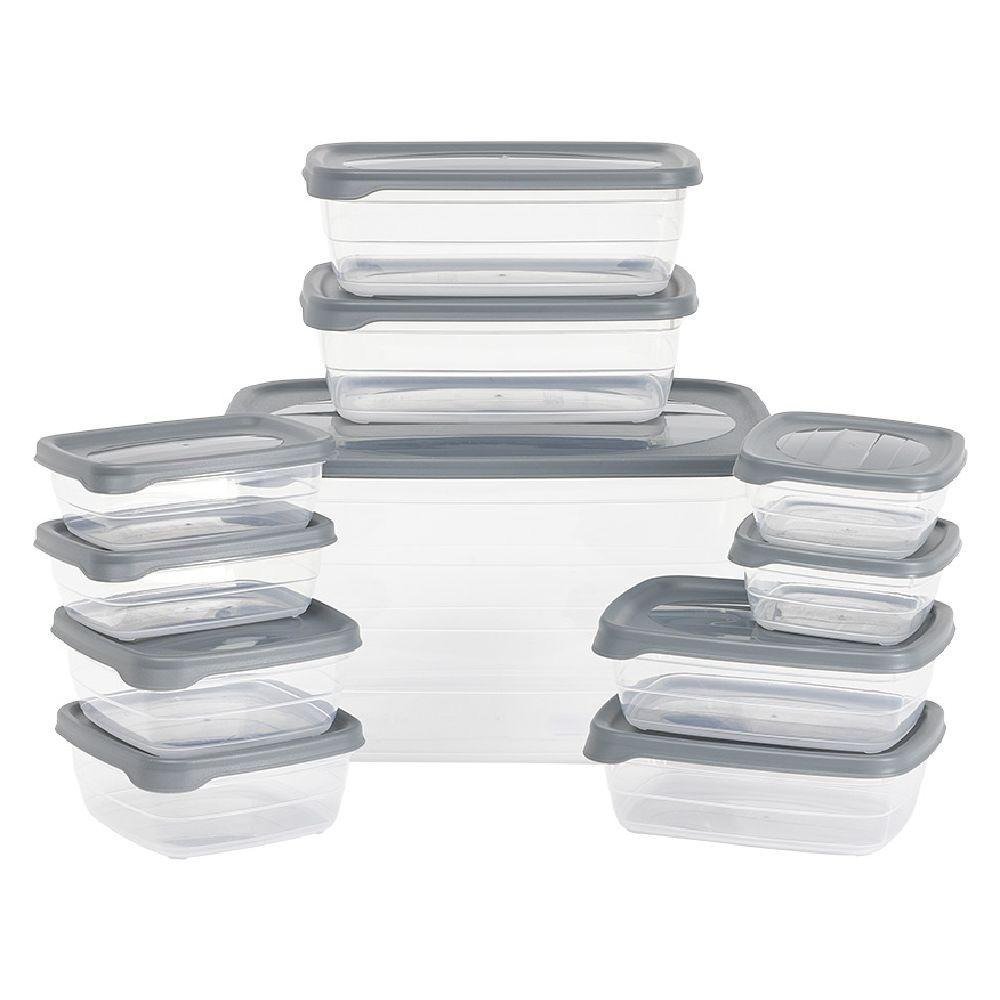
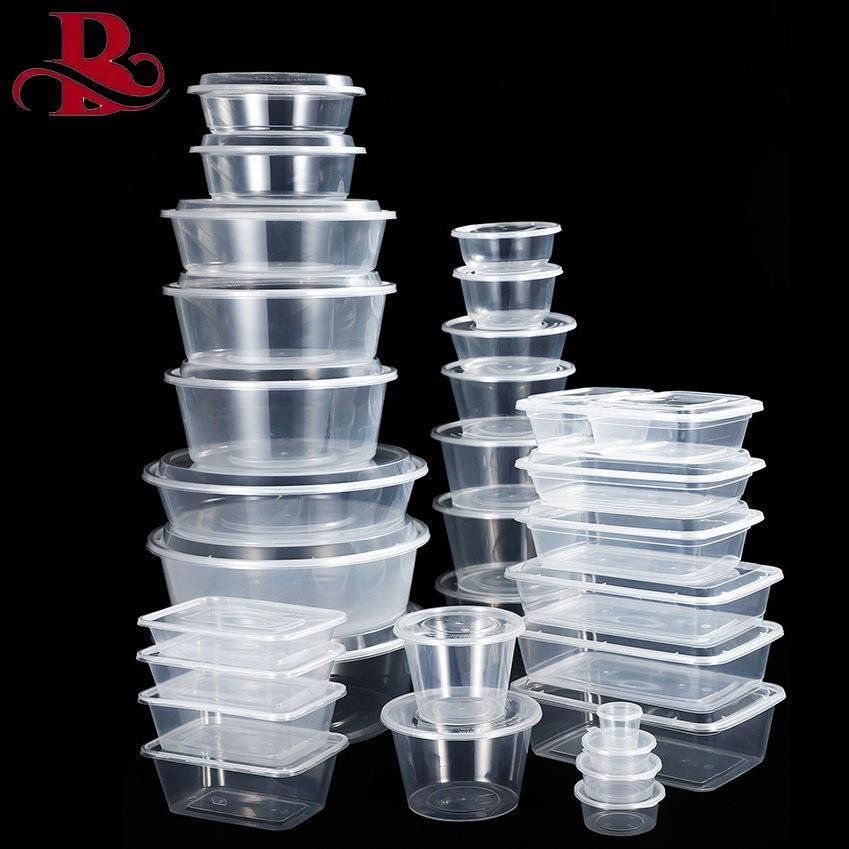
These machines can be used to manufacture a wide range of plastic packaging products, including:
- Food storage containers: Containers used for storing and organizing food.
- Takeaway containers: Packaging used by restaurants, food delivery services, and catering businesses.
- Plastic tubs and bowls: Containers for various food packaging applications.
- Container lids: Lids designed to fit specific container shapes and dimensions.
- Dairy and food packaging components: Selected tubs and packaging parts, depending on the product design and material.
- Reusable food containers: Products designed for repeated use when made with suitable materials and specifications.
The appropriate machine and mold depend on the product's size, wall thickness, weight, shape, and expected production volume.
Key Features to Consider Before Buying
Choosing the right machine is important for maintaining product quality and controlling manufacturing costs.
1. Clamping Force
Clamping force keeps the mold closed during injection. The required force depends on the projected area of the molded product, cavity layout, material, and process conditions.
A machine with the right clamping capacity helps prevent defects such as flash while supporting stable production.
2. Injection Capacity
The injection unit must be capable of supplying the required quantity of molten plastic for each molding cycle. Consider the product weight, number of cavities, runner system, and material requirements when evaluating injection capacity.
3. Cycle Time and Production Output
For high-volume packaging production, cycle time can significantly affect output. Evaluate the complete molding cycle, including injection, cooling, mold opening, and ejection, rather than focusing only on injection speed.
4. Energy Efficiency
Energy consumption affects the operating cost of a manufacturing facility. Compare machine power requirements, hydraulic or servo systems, operating conditions, and expected production utilization before making a decision.
5. Mold Compatibility
The machine must accommodate the mold's dimensions, thickness, weight, and opening requirements. The mold's cooling channels and ejection system are also important for efficient production.
6. Automation Compatibility
Automation options such as robotic part removal, conveyor systems, and material-handling equipment can help improve consistency and reduce manual handling where appropriate.
7. After-Sales Support
Technical assistance, spare-parts availability, maintenance support, and operator training can influence the long-term performance of your production line.
Which Plastic Materials Are Used for Food Containers?
The choice of plastic depends on the product's intended use, manufacturing process, and applicable food-contact requirements.
| Material | Common applications |
| Polypropylene (PP) | Food tubs, storage containers, takeaway packaging |
| Polystyrene (PS) | Selected packaging containers and trays |
| PET | Selected packaging products, depending on design and process suitability |
| Polyethylene (PE) | Certain containers, lids, and packaging components |
Important: Not every material is suitable for every food-contact application. Manufacturers should verify food-contact compliance, temperature resistance, migration requirements, and relevant Indian regulations for the intended use. PET packaging may also require a different manufacturing process depending on whether the product is a preform, bottle, tray, or another component.
How to Choose the Right Machine for Your Business
Before purchasing a food container injection molding machine, assess the following factors:
- Product specifications: Identify the container's dimensions, weight, wall thickness, and design.
- Production target: Estimate the required output per hour, shift, or day.
- Mold configuration: Confirm the number of cavities and the mold's technical requirements.
- Material selection: Ensure the machine and process are suitable for the intended plastic material.
- Operating costs: Evaluate energy consumption, material waste, maintenance, and labor.
- Future expansion: Consider whether the machine can support your planned product range and production growth.
- Supplier support: Review technical guidance, installation assistance, training, and service availability.
A machine should be selected based on the complete production requirement—not only its advertised speed or price.
Benefits of Choosing the Right Injection Molding Machine
When the machine, mold, and process are correctly matched, manufacturers can benefit from:
- Consistent product dimensions and quality
- Efficient large-volume production
- Repeatable manufacturing cycles
- Better control over material usage
- Reduced process variation
- Opportunities to automate repetitive operations
Actual results depend on machine specifications, mold design, material properties, maintenance, and operating conditions.
Why Choose Boss Automation?
When investing in injection molding equipment, manufacturers should look for a machine supplier that understands their product requirements and production goals.
Boss Automation provides injection molding machine solutions for manufacturers seeking reliable production equipment. When evaluating a machine for food container production, discuss your product specifications, target output, mold details, material, and automation requirements with the technical team.
The right machine configuration can help support consistent production and long-term manufacturing efficiency.
Frequently Asked Questions
1. What is a food container injection molding machine used for?
It is used to manufacture plastic food containers and packaging components, including selected tubs, bowls, storage containers, takeaway containers, and lids.
2. Which plastic is commonly used for food containers?
Polypropylene (PP) is commonly used for many rigid food containers. The suitable material depends on the application, product design, temperature requirements, and food-contact compliance.
3. What factors determine machine capacity?
Important factors include clamping force, injection capacity, mold dimensions, cavity count, product weight, cycle time, and target production volume.
4. Can injection molding machines produce containers in different sizes?
Yes. Different container designs and sizes can be produced using suitable molds, provided the machine meets the mold and processing requirements.
5. How can manufacturers improve production efficiency?
Efficiency can be improved through appropriate machine selection, optimized mold design, effective cooling, stable process settings, preventive maintenance, and suitable automation.
6. How do I choose a food container injection molding machine manufacturer in India?
Compare machine specifications, manufacturing capabilities, technical support, spare-parts availability, energy requirements, and the supplier's ability to meet your specific production needs.
Conclusion
A food container injection molding machine can be an important investment for businesses manufacturing plastic food packaging and storage products. Selecting the right machine requires careful evaluation of product design, material, mold specifications, production targets, energy use, and technical support.
If you are planning to expand your plastic container manufacturing capacity, start by defining your production requirements and comparing machine configurations that suit your business.
Looking for the right injection molding machine for your manufacturing needs?
Contact Boss Automation to discuss your product requirements and explore suitable machine solutions.