B
O
S
S
A
U
T
O
Loading
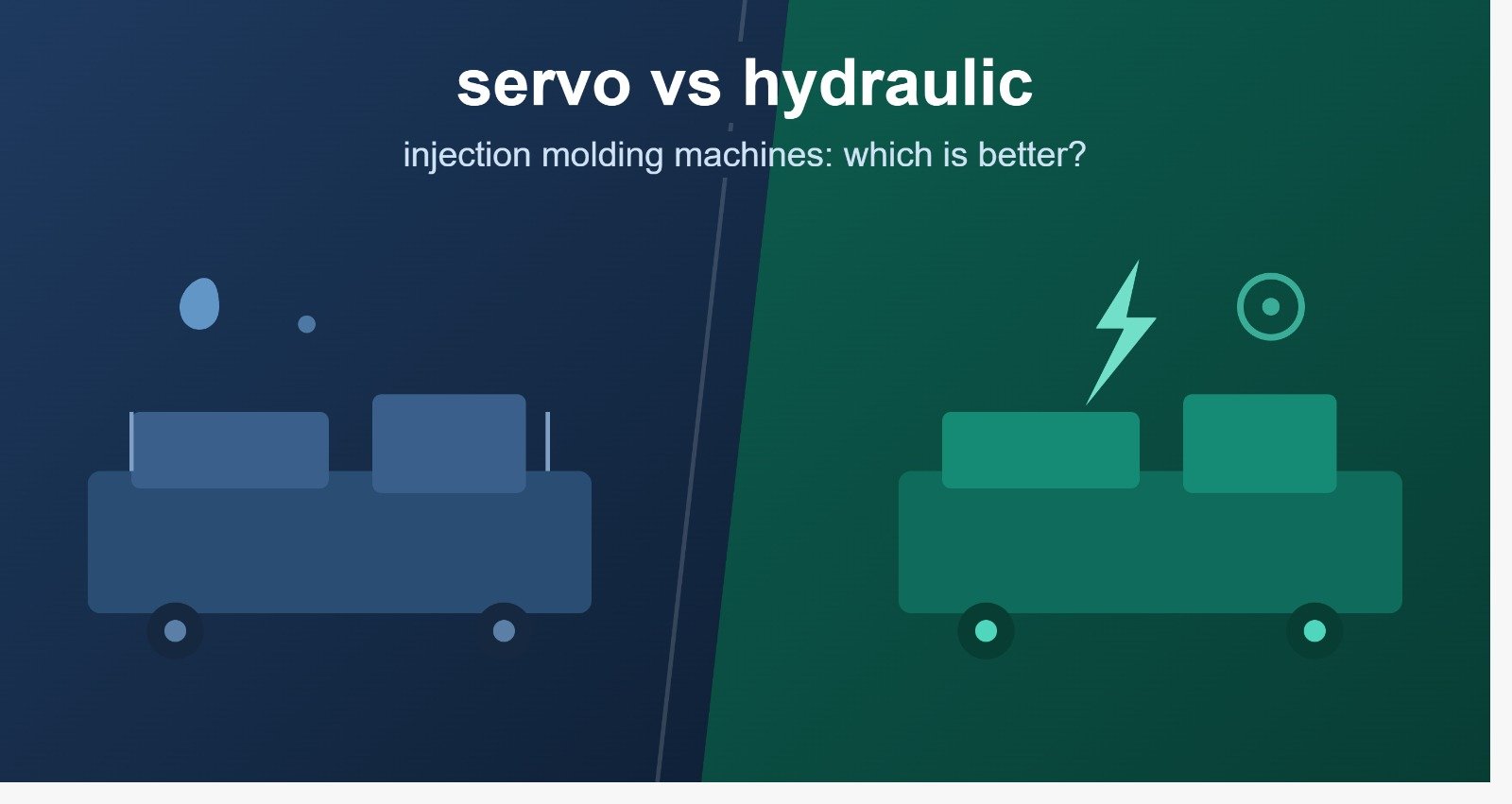
Servo vs Hydraulic Injection Molding Machine: Which Is Better?
14
Sep
Servo vs Hydraulic Injection Molding Machine: Which Is Better?
Introduction
Choosing the right injection molding machine is an important decision for any plastic manufacturer. Machine selection directly affects production speed, product quality, energy consumption, operating costs and overall productivity.
Two commonly considered technologies are servo injection molding machines and hydraulic injection molding machines.
Both technologies have their own advantages and can be suitable for different manufacturing applications. But which one is better for your production requirements?
In this guide, we compare servo vs hydraulic injection molding machines based on energy efficiency, performance, precision, maintenance, operating costs and applications.
What Is a Hydraulic Injection Molding Machine?
A hydraulic injection molding machine uses a hydraulic power system to control machine movements such as injection, clamping and other operations.
Hydraulic machines have been widely used in the plastic manufacturing industry for many years and are available across a broad range of machine sizes and clamping forces.
Key Advantages
- Proven technology
- Strong clamping performance
- Suitable for heavy-duty applications
- Wide range of machine sizes
- Reliable for many plastic-processing applications
- Suitable for large and complex products
Hydraulic injection molding machines remain a practical choice for many manufacturers, especially where heavy-duty performance is a priority.
What Is a Servo Injection Molding Machine?
A servo injection molding machine uses a servo motor-driven hydraulic system and advanced controls to provide more precise control over machine movements and power usage.
Instead of continuously running the hydraulic pump at full capacity, the servo system can adjust motor operation according to the machine's actual requirements.
This can help reduce unnecessary energy consumption while maintaining accurate machine operation.
Key Advantages
- Improved energy efficiency
- Precise control
- Lower operating noise
- Efficient machine movements
- Reduced unnecessary power consumption
- Suitable for automated production
- Consistent production performance
Servo technology is increasingly considered by manufacturers looking for energy-efficient injection molding solutions.
Servo vs Hydraulic Injection Molding Machine: Comparison
| Feature | Servo Injection Molding Machine | Hydraulic Injection Molding Machine |
| Energy Efficiency | Generally higher | Generally lower |
| Machine Control | Precise | Reliable |
| Noise Level | Generally lower | Generally higher |
| Power Usage | Optimized according to demand | Hydraulic system may run continuously |
| Precision | High | Good |
| Automation | Highly suitable | Suitable |
| Operating Cost | Potentially lower | Can be higher depending on usage |
| Technology | Modern control system | Established technology |
| Heavy-Duty Applications | Suitable depending on configuration | Very suitable |
| Initial Investment | May be higher | Often more economical initially |
The actual performance and energy savings will depend on machine design, production cycle, product, material, operating conditions and machine configuration.
1. Energy Efficiency
Energy consumption is one of the biggest considerations for plastic manufacturers.
Traditional hydraulic machines can consume more energy because the hydraulic power system may operate even when full power is not required.
Servo-driven systems can adjust motor speed and power according to the machine's operating requirements.
Why Does This Matter?
Injection molding machines often operate for long production hours. Even small improvements in energy efficiency can contribute to lower operating expenses over time.
For manufacturers focused on energy-efficient plastic manufacturing, servo technology can be an attractive option.
2. Precision and Control
Modern plastic products often require consistent dimensions and repeatable quality.
Servo systems provide precise control over machine movements, pressure and speed.
This can help manufacturers maintain consistent processing conditions during repeated production cycles.
Hydraulic machines can also provide reliable and accurate operation when properly configured and maintained.
However, the control technology used in modern servo machines can provide additional flexibility for manufacturers requiring precise process control.
3. Production Speed
Production speed depends on several factors, including:
- Machine configuration
- Mold design
- Injection speed
- Cooling time
- Material
- Product design
- Automation
- Machine cycle
A servo machine can provide efficient and responsive machine movements, which can contribute to optimized cycle times.
However, servo does not automatically mean faster production. The complete molding process must be optimized to achieve the desired cycle time.
4. Noise Level
Servo-driven injection molding machines can operate more quietly because the motor and hydraulic system can adjust operation according to demand.
This can contribute to a more comfortable factory environment.
Hydraulic machines may produce more noise because of continuous hydraulic pump operation, depending on their design and operating conditions.
5. Maintenance
Maintenance requirements depend heavily on the machine design and operating environment.
Hydraulic machines require attention to components such as:
- Hydraulic oil
- Pumps
- Valves
- Seals
- Hydraulic hoses
- Filters
Servo machines can reduce certain hydraulic-system operating demands, but they still require proper maintenance of mechanical, hydraulic, electrical and control components.
Regular preventive maintenance is important for both types of injection molding machines.
6. Operating Cost
The total cost of owning an injection molding machine is more than its purchase price.
Manufacturers should consider:
Purchase Cost + Energy Cost + Maintenance + Downtime + Production Efficiency
A hydraulic machine may have a lower initial investment in some cases.
A servo machine may offer opportunities for lower energy consumption and improved operating efficiency over its working life.
Therefore, manufacturers should compare the total cost of ownership, rather than choosing a machine based only on its initial price.
7. Automation and Modern Production
Modern plastic manufacturing increasingly uses automation systems such as:
- Robotic part removal
- Conveyors
- Automatic material handling
- Vision inspection
- Automatic packaging
- Production monitoring systems
Servo injection molding machines can be well suited to automated production environments because of their precise and controllable machine movements.
However, hydraulic machines can also be integrated with automation systems when appropriately configured.
Which Machine Is Better for Your Business?
There is no universal answer to whether a servo or hydraulic machine is better.
The right choice depends on your manufacturing requirements.
Choose a Servo Injection Molding Machine When:
- Energy efficiency is a major priority
- Machines operate for long production hours
- Precise control is important
- You want modern machine controls
- You are planning an automated production line
- Reducing operating costs is important
- Consistent production performance is required
Consider a Hydraulic Injection Molding Machine When:
- Heavy-duty operation is required
- High clamping force is important
- Initial machine investment is a major consideration
- Your application is well suited to conventional hydraulic technology
- You require a proven and widely used machine technology
Important Factors Before Buying
Before purchasing an injection molding machine, manufacturers should evaluate:
Product Requirements
Consider product size, weight, design and required quality.
Mold Requirements
Check mold dimensions, mold weight, platen size and tie-bar spacing.
Clamping Force
Select sufficient clamping force according to the mold and product requirements.
Material
Different plastics may require different processing temperatures, pressures and screw configurations.
Production Volume
High-volume production may benefit from efficient machines and automation.
Cycle Time
Evaluate the complete cycle rather than focusing only on injection speed.
Energy Consumption
Compare expected power consumption during actual production.
Service and Spare Parts
Reliable technical support and spare-parts availability are important for minimizing downtime.
Servo vs Hydraulic: A Simple Example
Suppose a manufacturing company operates an injection molding machine for many hours every day.
If energy consumption is a significant portion of its operating expenses, improving machine efficiency could have a meaningful impact on long-term costs.
In such a situation, a servo injection molding machine may be worth considering.
On the other hand, if the application requires heavy-duty performance and the manufacturer prioritizes a proven hydraulic system with a lower initial investment, a hydraulic injection molding machine may be appropriate.
The final decision should always be based on the actual production application.
Why Choose the Right Injection Molding Technology?
The injection molding machine is at the heart of the production process.
The right machine can help manufacturers achieve:
- Consistent product quality
- Better production efficiency
- Optimized energy consumption
- Reliable operation
- Reduced production downtime
- Improved productivity
- Better long-term manufacturing economics
Machine selection should therefore be treated as a long-term production investment, not simply an equipment purchase.
Conclusion
Both servo and hydraulic injection molding machines have an important role in the plastic manufacturing industry.
Hydraulic machines offer established technology and strong performance across many applications. Servo machines provide modern control, improved energy efficiency and efficient machine operation.
For manufacturers looking to reduce energy consumption and improve production efficiency, a servo injection molding machine can be an excellent option. For heavy-duty applications and specific production requirements, hydraulic technology can still be highly suitable.
The best machine ultimately depends on product requirements, mold, material, production volume, cycle time, clamping force, automation and total cost of ownership.
Boss Automation offers injection molding machine solutions designed to meet different plastic manufacturing requirements, helping manufacturers select suitable technology for efficient and reliable production.
Frequently Asked Questions
Is a servo injection molding machine better than a hydraulic machine?
A servo machine can offer advantages in energy efficiency, control and operating efficiency, but the better choice depends on the specific production application.
Are servo injection molding machines energy efficient?
Yes. Servo-driven systems can optimize motor operation according to machine demand, potentially reducing unnecessary energy consumption.
Are hydraulic injection molding machines still useful?
Yes. Hydraulic machines remain widely suitable for many plastic manufacturing applications, particularly where robust and heavy-duty performance is required.
Which machine has lower operating costs?
Operating costs depend on machine size, production hours, material, cycle time, energy consumption and maintenance. Servo machines can provide opportunities for lower energy-related operating costs.
Which machine is better for high-volume production?
Both can be used for high-volume production. The better option depends on cycle time, product requirements, automation, energy efficiency and the overall production setup.